Pressing the Advantage: Xi Spots Trump’s Weak Point
United Daily News Report, September 26, 2026
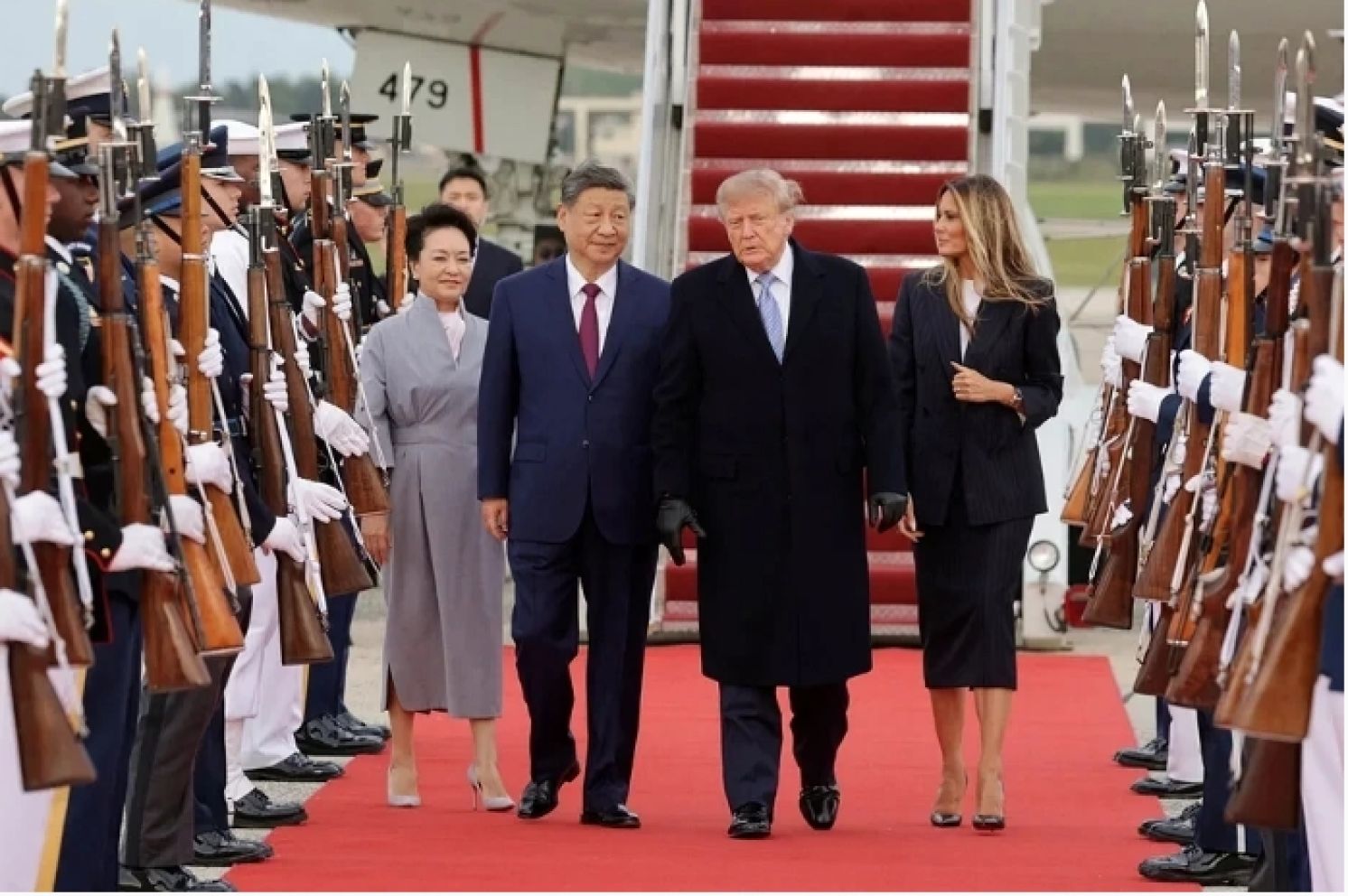
Chinese President Xi Jinping told President Donald Trump at the White House that he hoped the United States would uphold the correct position of opposing “Taiwan independence” and handle the Taiwan issue prudently. Compared with his aggressive warning in Beijing in May, Mr. Xi’s language was less forceful, but his objective was more explicit. Trump is under pressure both at home and abroad, including the midterm elections just over a month away and the Iran war, for which a ceasefire remains nowhere in sight. Yet if he were to make further concessions to Beijing and accept Mr. Xi’s demands, he would also have difficulty answering to the U.S. Congress, leaving him caught in a dilemma.
At the Beijing summit in May, Mr. Xi, as the host, directly drew a red line for Trump on the Taiwan issue. Mr. Xi warned at the time that if the Taiwan issue were not handled properly, the two countries would collide or even come into conflict, pushing the entire China-U.S. relationship into an extremely dangerous situation. He stressed that “Taiwan independence” and peace across the Taiwan Strait are fundamentally incompatible. More than four months later, Mr. Xi has toned down his tough rhetoric, but publicly stated that he hoped the United States would uphold its opposition to “Taiwan independence,” linking this objective to “China-U.S. strategic cooperation and the development of bilateral relations.” From Beijing to Washington, Mr. Xi’s statements reflect the position that “the Taiwan issue is the first red line that must not be crossed in China-U.S. relations.”
What has led Beijing to see an opportunity to push further on the Taiwan issue? The key lies in Trump’s retreat on Taiwan over the past four months or, put another way, his movement closer to Beijing’s position.
Following the Trump-Xi summit in May, Mr. Trump repeatedly made statements aboard Air Force One after departing Beijing and in subsequent interviews, including that he did not want anyone moving toward independence, that he was unwilling to travel 9,500 miles to fight a war, and that he did not want anyone pursuing Taiwan independence because they had U.S. support. Beyond his rhetoric, the Trump administration has also put $14 billion in arms sales to Taiwan on hold, while it has become increasingly difficult for President Lai Ching-te to transit through the continental United States during overseas trips.
Given these developments, Beijing may believe that Mr. Trump has, to some extent, accepted Mr. Xi’s position on the Taiwan issue. But now that Mr. Trump needs Beijing even more—from the midterm elections to the Middle East, the Russia-Ukraine war, and even the situation on the Korean Peninsula—these problems would become more difficult without Beijing’s cooperation or willingness to “stay out.” As Mr. Xi said in his remarks at the White House welcoming ceremony, “Although China-U.S. cooperation cannot solve all the world’s problems, many of the world’s problems would be difficult to resolve without cooperation between the two countries.” Having identified Mr. Trump’s weakness, Mr. Xi seized the opportunity to take another step forward, asking Mr. Trump to state his opposition to Taiwan independence.
Beijing has now made another move, but the ball remains in Mr. Trump’s court. The White House has yet to release a readout of the talks, and even if it does, it may not provide details of the exchanges. A more likely scenario is a repeat of the May Beijing summit, with Mr. Trump waiting until Mr. Xi has flown out of the United States before addressing Taiwan-related issues in interviews. That would also be the moment that makes Taipei most apprehensive.
Mr. Trump’s dilemma is that he does indeed need Mr. Xi’s assistance or cooperation, but in reality, he cannot make too many concessions to Beijing. Doing so would not only dishearten allies, including Taiwan, and undermine American credibility in the Asia-Pacific, but would also be difficult to explain domestically, particularly to a Congress where China hawks are prevalent.
Moreover, the differences between the United States and China remain numerous and intense, while the long-term structural confrontation between the two countries continues. Trump may still want to keep the Taiwan card in his hand. Yet Taiwan’s fate and future, swaying between the two great powers of the United States and China, constitute a helpless and harsh reality.